

When designing a fitness space—whether for a commercial gym or a hotel—every square meter counts. You need equipment that offers variety, engages members, and maximizes return on investment. That's where a functional trainer comes in. Unlike single-purpose machines, a functional trainer lets users perform hundreds of exercises with just one station. In this article, we'll explore what makes a functional trainer essential, how to choose the right one, and which models from leading brands like MBH can fit your facility's needs.
What Is a Functional Trainer?
A functional trainer is a cable-based machine with two adjustable arms or pulleys. It allows users to perform compound and isolation movements that mimic real-life activities—pushing, pulling, twisting, and lifting. Unlike plate-loaded or selectorized machines that lock users into fixed movement paths, a functional trainer offers free-range motion. This makes it a favorite among personal trainers for corrective exercises and sports performance training.
Benefits for Gym Owners
Space Efficiency
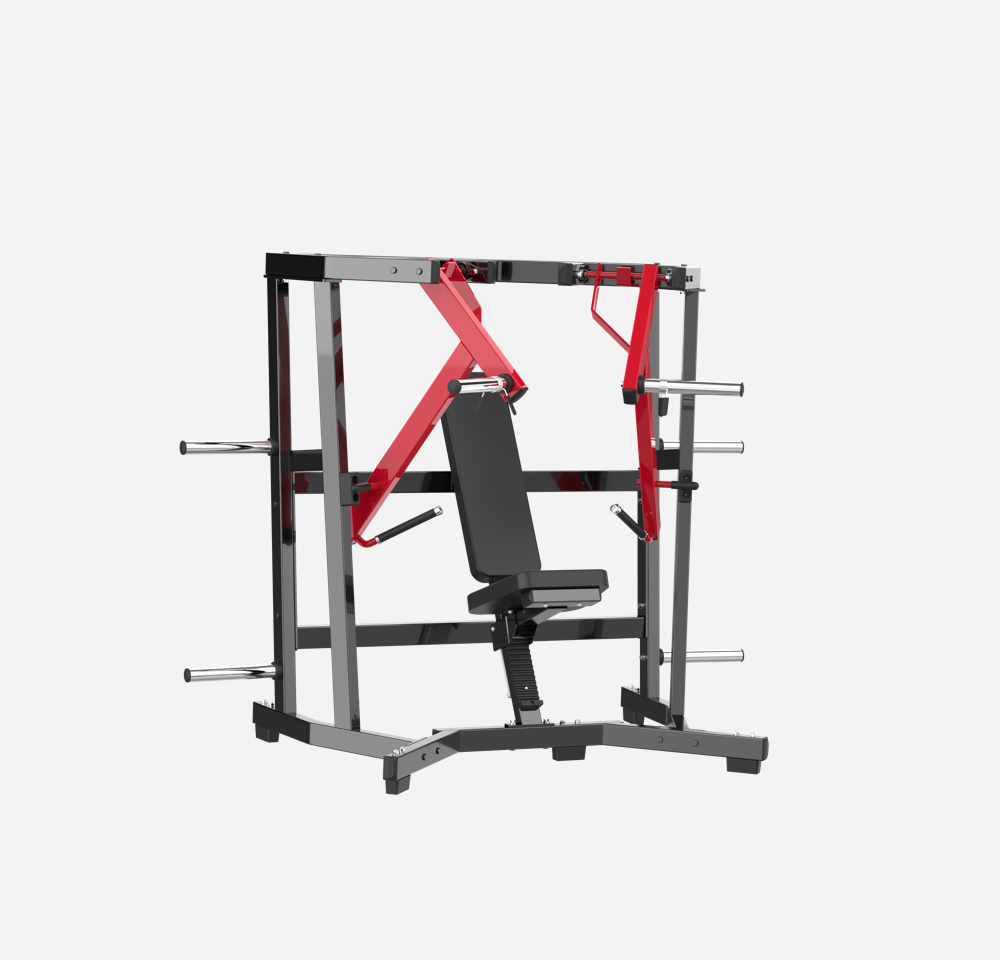
With a functional trainer, you replace the need for separate cable crossovers, lat pulldowns, and Low RoW stations. One machine can handle Chest Presses, rows, shoulder raises, triceps pushdowns, and even squats with attachments. For example, the AMV-32 WILD CHEST is a dedicated chest trainer, but for a truly versatile solution, consider a dual-adjustable pulley system.
Member Appeal
Functional training is trending. Members want exercises that carry over to daily life and sports. A functional trainer attracts all demographics: beginners recovering from injury, athletes building explosive power, and seniors improving balance. It's also easy to learn—many can self-guide with online videos, reducing the need for constant staff supervision.
Revenue Opportunities
If you offer personal training, a functional trainer is a trainer's best friend. It enables countless variations without changing machines. You can upsell small group training sessions anchored around the functional trainer. Hotels can offer guests complimentary guided workouts using the same equipment, enhancing the guest experience.
Key Features to Look For
When evaluating a functional trainer, consider:
- Cable weight stack: Look for at least 75-100 kg per side to accommodate both rehabilitation and heavy strength work.
- Smooth pulley action: Ball-bearing pulleys reduce friction and provide consistent resistance.
- Adjustable arms: Arms that slide or pivot allow more exercise variations (e.g., Low RoWs, overhead presses).
- Compact footprint: Many models now integrate a lat pulldown seat or leg hold-down to save space.
How MBH Fits the Picture
MBH, a Chinese commercial equipment brand, produces a range of strength machines that complement a functional trainer setup. While their lineup includes specialized isolated machines like the AMV-37A STANDING LATERAL RAISE and the AMV-38 CROSS LAT PULLDOWN, you can build a complete zone around a central functional trainer. For example, pair a functional trainer with the MET1-20 Arm Down Back Muscle Training for targeted back work.
Standalone Functional Trainer Models
Although MBH's catalog focuses on plate-loaded and selectorized machines, many of their dual-cable systems (like the LAS-06 Row and LAS-07 Pull Down) can be arranged together to mimic a functional trainer setup. The key is to choose machines that allow independent arm movement. The LAS-00 Calf is a unique addition for lower body.
Case Study: Hotel Fitness Center Layout
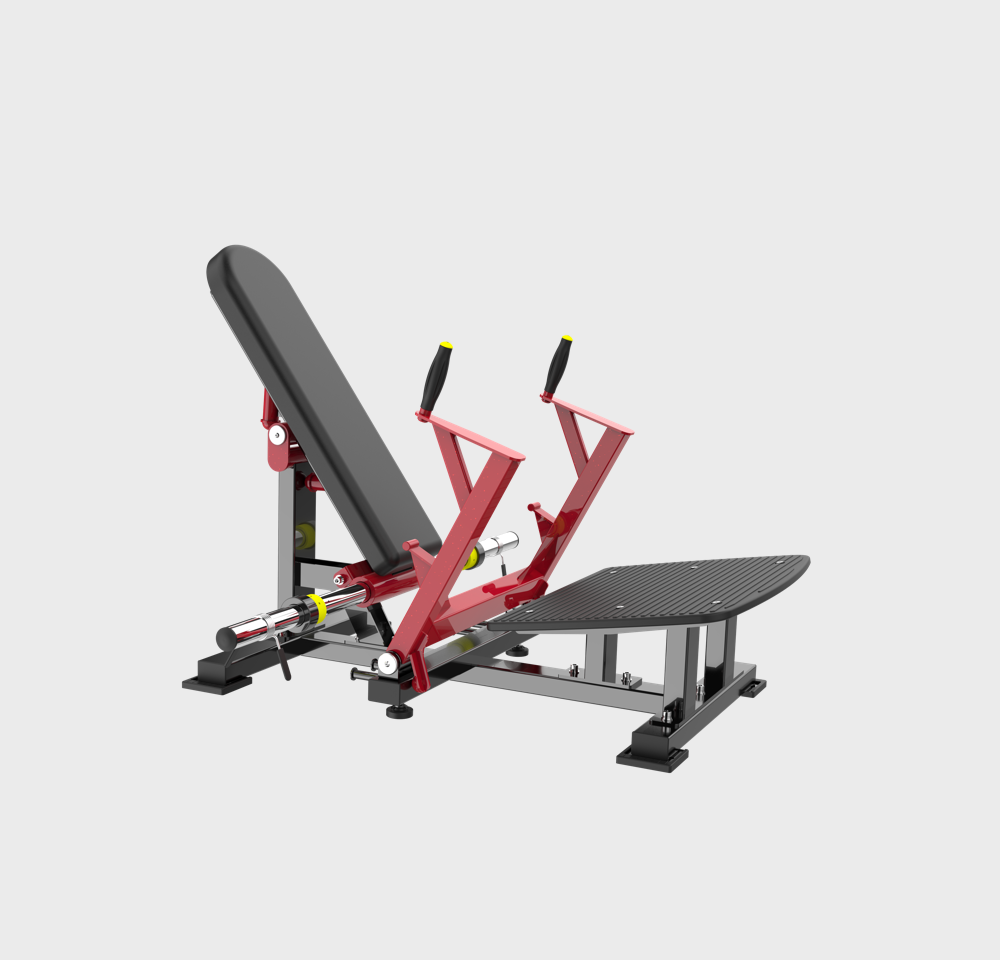
Imagine a 40 sqm hotel gym. You need to serve business travelers, families, and fitness enthusiasts. Instead of four separate machines (Chest Press, lat pulldown, Low RoW, Shoulder Press), you install one functional trainer and add two plate-loaded accessories like the AMV-45 INCLINED SQUAT MACHINE and the AMV-40 HIP THRUST. The functional trainer covers upper body push/pull, core, and arms. The squat and hip thrust handle lower body strength. This layout saves space and offers variety.
Maintenance and Durability
Commercial-grade functional trainers should have a powder-coated frame (at least 14-gauge steel), sealed bearings, and nylon-coated cables for longevity. MBH equipment, with its ex-factory direct pricing, offers robust construction suitable for high-traffic environments. Regular lubrication of pulleys and cable inspection ensures years of trouble-free use.
Final Thoughts
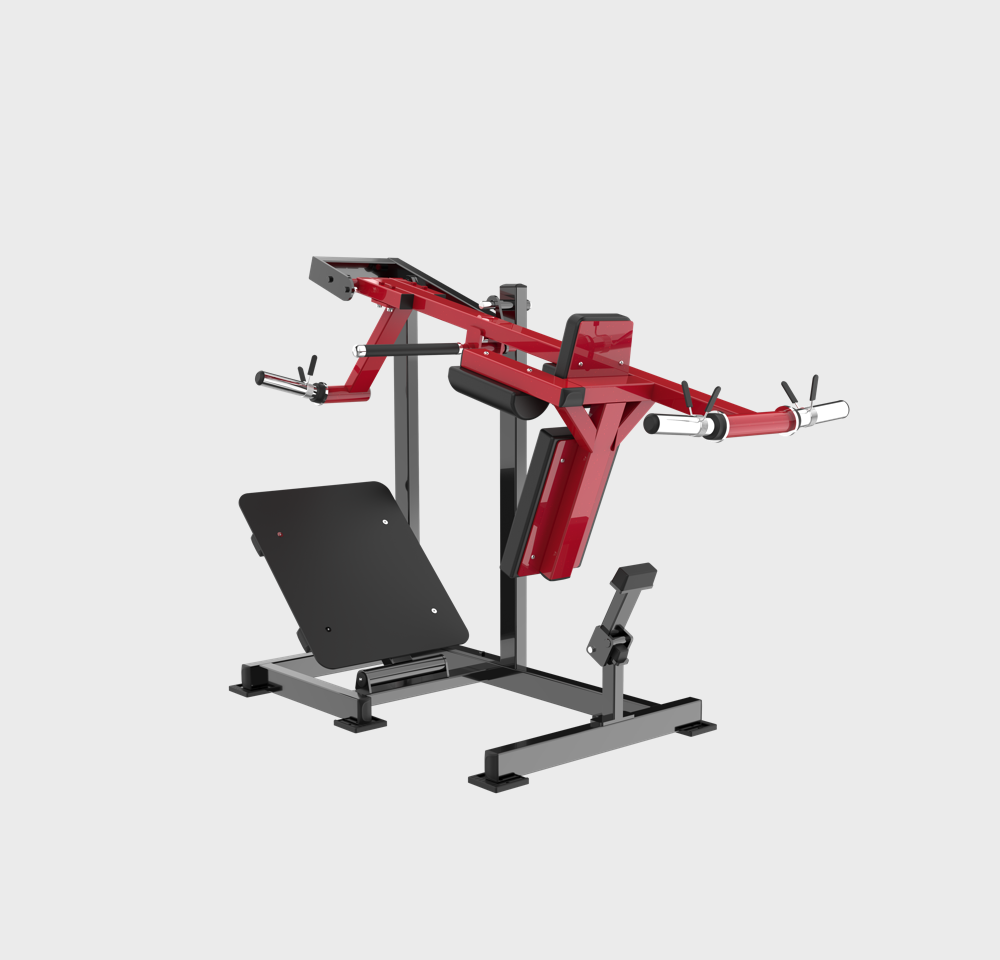
A functional trainer is not just another machine—it's the centerpiece of a modern, efficient gym. It caters to a wide range of users and maximizes floor space. When choosing a vendor, consider brands like MBH that offer integrated solutions at factory-direct prices. Start with one functional trainer, then expand with complementary machines like the AMV-42 PENDULUM SQUAT or the MET1-01 Iso Lateral Incline Press to create a full-body training zone.
Investing wisely in functional training equipment will keep your members engaged and your facility competitive.