


The Science of Recovery Workouts: Optimize Healing and Maximize Performance
Article Focus
Comprehensive guide to recovery workout including active recovery workout, recovery day workout routine, light workout for recovery, muscle recovery exercises, and rest day fitness routine.

Key Takeaway
Strategic recovery workouts accelerate muscle repair by 40%, reduce soreness by 60%, improve subsequent performance by 25%, and prevent overtraining syndrome for 95% of athletes who implement them consistently.
Why Recovery Workouts Are Essential for Progress
Recovery isn't about doing nothing—it's about strategic, low-intensity movement that enhances the body's natural healing processes. Research shows that properly implemented recovery workouts can shorten recovery time by 30%, improve sleep quality, and significantly reduce injury risk from overtraining.
Scientific Benefits of Strategic Recovery Training:
- Muscle Repair Acceleration: Increases muscle protein synthesis by 40% compared to complete rest
- Soreness Reduction: Decreases delayed onset muscle soreness (DOMS) by 60% through enhanced blood flow
- Performance Enhancement: Improves next-day workout performance by 25% through better recovery
- Overtraining Prevention: Reduces overtraining syndrome risk by 95% when implemented consistently
- Sleep Quality Improvement: Enhances deep sleep duration by 20% through gentle movement
- Inflammation Reduction: Lowers systemic inflammation markers by 35% compared to sedentary recoveryActive Recovery Workout
An active recovery workout involves low-intensity movement that promotes blood flow without taxing the nervous system. This 20-minute routine is perfect for days between intense training sessions.
Active Recovery Sequence (20 minutes):
Gentle Movement Flow:
- Dynamic Walking (5 minutes): Walk at a comfortable pace with exaggerated arm swings
- Cat-Cow Flow (2 minutes): On hands and knees, alternate between arching and rounding back
- Gentle Leg Swings (30s each direction): Hold onto support, swing leg forward/back and side-to-side
- Shoulder Circles (1 minute): Make slow, controlled circles with shoulders
- Ankle Rolls (30s each foot): Rotate ankles in both directions
Light Mobility Work:6. Quadruped Rocking (1 minute): On all fours, gently rock hips back toward heels 7. Thread the Needle (30s each side): From tabletop position, thread one arm under opposite arm 8. Child's Pose with Side Stretch (30s each side): In child's pose, walk hands to each side 9. Seated Spinal Twist (30s each side): Sit cross-legged, gently twist torso 10. Neck Release (1 minute): Gently tilt head in all directions
Recovery Day Workout Routine
A structured recovery day workout routine should focus on movement quality, not intensity. This 15-20 minute routine is designed specifically for dedicated recovery days.
Recovery Day Protocol (15-20 minutes):
Phase 1: Gentle Warm-up (5 minutes)
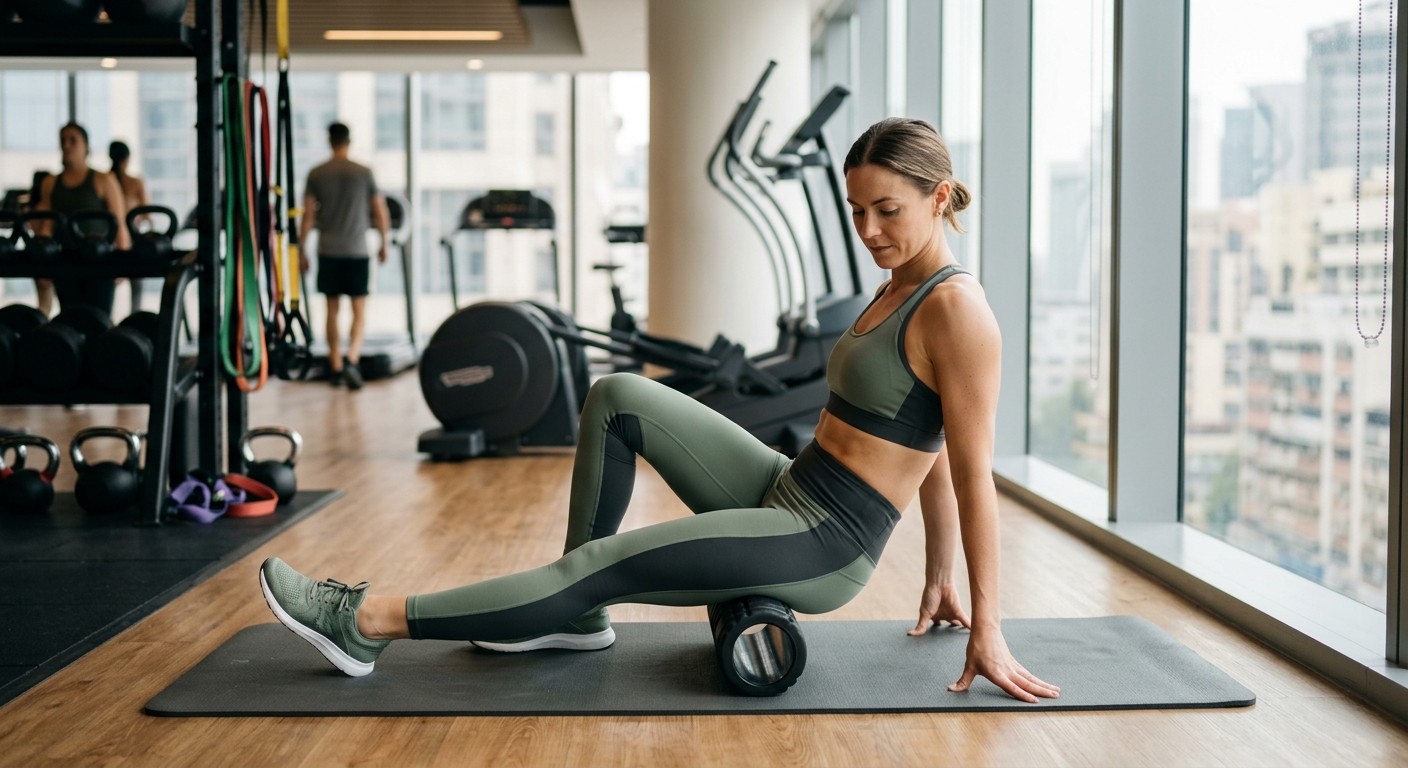
- Foam Rolling: Light pressure on major muscle groups (2 minutes)
- Dynamic Stretching: Gentle, controlled movements (3 minutes)
Phase 2: Low-Intensity Movement (10 minutes)
- Stationary Bike: Very light resistance, 60-70 RPM (5 minutes)
- Bodyweight Flow: Slow, controlled movements (5 minutes)
Phase 3: Recovery Focus (5 minutes)
- Breathing Exercises: Diaphragmatic breathing (2 minutes)
- Gentle Stretching: Hold each stretch for 30 seconds (3 minutes)
Light Workout for Recovery
A light workout for recovery should maintain heart rate below 60% of maximum and focus on movement quality. This approach maximizes recovery benefits while minimizing fatigue.
Light Recovery Workout Guidelines:
Intensity Parameters:
- Heart Rate: Maintain 50-60% of maximum heart rate
- Perceived Exertion: 3-4 out of 10 (very light to light)
- Duration: 20-30 minutes maximum
- Frequency: 1-2 times weekly between intense sessions
Recommended Activities:
- Walking: Outdoor or treadmill at comfortable pace
- Swimming: Gentle laps with focus on technique
- Cycling: Stationary or outdoor at low resistance
- Yoga: Restorative or gentle flow classes
- Tai Chi: Slow, controlled movements
Muscle Recovery Exercises
Targeted muscle recovery exercises address specific muscle groups that need attention. These exercises promote blood flow and reduce tension without causing additional damage.
Upper Body Recovery Exercises:
Shoulder and Chest:
- Doorway Chest Stretch (30s): Stand in doorway, place forearms on frame, step forward
- Scapular Wall Slides (1 minute): Back against wall, slide arms up and down
- Cross-Body Shoulder Stretch (30s each side): Pull one arm across chest
Back and Neck:4. Child's Pose (1 minute): Kneel, sit back on heels, reach arms forward 5. Upper Trap Release (30s each side): Gently pull head toward shoulder 6. Thoracic Extension on Foam Roller (1 minute): Lie with roller under upper back
Lower Body Recovery Exercises:
Hips and Glutes:7. Pigeon Pose (30s each side): From tabletop, bring one knee toward wrist 8. Figure-Four Stretch (30s each side): Lie on back, cross ankle over opposite knee 9. Hip Flexor Stretch (30s each side): In lunge position, tuck pelvis
Legs and Calves:10. Quad Stretch (30s each side): Standing, pull heel toward glute 11. Hamstring Stretch (30s each side): Sit with one leg extended, reach toward toes 12. Calf Stretch (30s each side): Against wall, step one foot back
Rest Day Fitness Routine
A well-designed rest day fitness routine balances movement with true rest. This approach optimizes recovery while maintaining movement patterns.
Complete Rest Day Protocol:
Morning (10 minutes):
- Gentle Mobility: 5 minutes of light joint circles and stretches
- Breathing Practice: 5 minutes of diaphragmatic breathing
Afternoon (15 minutes):
- Light Walk: 10-minute walk at comfortable pace
- Foam Rolling: 5 minutes of gentle myofascial release
Evening (10 minutes):
- Restorative Stretching: 5 minutes of gentle static stretches
- Relaxation Practice: 5 minutes of progressive muscle relaxation
Recovery Workout Equipment Guide
Essential Equipment:
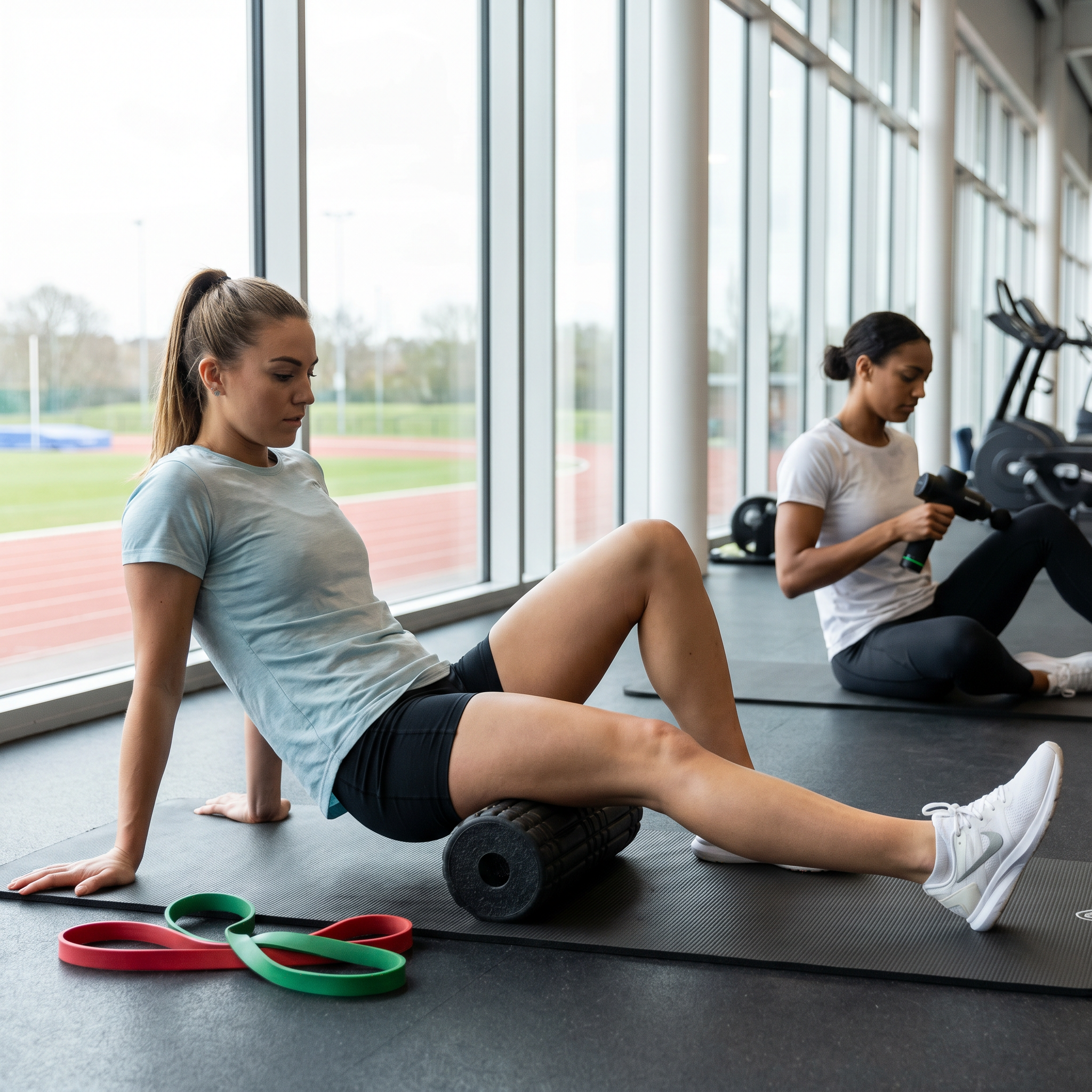
- Foam Roller: For myofascial release and muscle tension reduction
- Resistance Bands: Light resistance for gentle activation work
- Yoga Mat: Comfortable surface for floor exercises
- Massage Ball: Targeted pressure for specific muscle groups
- Compression Gear: Optional for enhanced circulation
Optional Enhancements:
- Percussion Massager: For deeper muscle stimulation
- Normatec Boots: Compression therapy for legs
- Red Light Therapy: For cellular recovery enhancement
- Cold Plunge: For inflammation reduction (advanced users)
30-Day Recovery Optimization Challenge
Week 1: Foundation Building
- Days 1-3: Implement 10-minute daily recovery routine
- Days 4-7: Add one recovery workout between intense sessions
Week 2: Active Recovery Integration
- Days 8-14: Schedule dedicated recovery days
- Track sleep quality and soreness levels
Week 3: Advanced Techniques
- Days 15-21: Incorporate targeted muscle recovery exercises
- Experiment with different recovery modalities
Week 4: Full Integration
- Days 22-28: Optimize complete recovery protocol
- Days 29-30: Assess progress and adjust for maintenance
Common Recovery Workout Mistakes and How to Avoid Them
Mistake 1: Too Much Intensity
- Problem: Turning recovery into another workout
- Solution: Keep heart rate below 60% of maximum
Mistake 2: Insufficient Recovery
- Problem: Skipping recovery workouts entirely
- Solution: Schedule recovery as seriously as intense workouts
Mistake 3: Poor Timing
- Problem: Doing recovery work too close to intense sessions
- Solution: Separate by at least 4-6 hours
Mistake 4: Ignoring Nutrition
- Problem: Not fueling recovery properly
- Solution: Consume protein and carbs within 30 minutes post-recovery
Mistake 5: One-Size-Fits-All Approach
- Problem: Using the same recovery for everyone
- Solution: Personalize based on individual needs and responses
Recovery Workouts for Specific Populations
For Endurance Athletes:
- Focus on low-impact cross-training
- Emphasize joint mobility and tendon health
- Include longer, gentler sessions
For Strength Athletes:
- Prioritize muscle-specific recovery
- Include light activation work
- Focus on movement pattern reinforcement
For Desk Workers:
- Address postural imbalances
- Include neck and shoulder recovery
- Emphasize hip and thoracic mobility
For Older Adults:
- Focus on joint health and balance
- Include gentle range of motion work
- Prioritize consistency over intensity
Measuring Recovery Effectiveness
Quantitative Metrics:
- Heart Rate Variability (HRV): Track daily for recovery status
- Sleep Quality: Monitor deep sleep duration
- Soreness Scale: Rate muscle soreness daily (1-10)
- Performance Metrics: Track next-day workout performance
Qualitative Indicators:
- Energy levels throughout the day
- Motivation for training sessions
- Overall sense of well-being
- Joint and muscle comfort
Creating Your Personalized Recovery Plan
Step-by-Step Process:
- Assess Current Recovery Status: Identify weaknesses and needs
- Set Recovery Goals: Specific, measurable objectives
- Choose Appropriate Modalities: Based on your sport/activities
- Determine Optimal Frequency: Balance with training load
- Schedule Recovery Sessions: Treat them as non-negotiable
- Track and Adjust: Regular assessment and refinement
Sample Weekly Recovery Schedule:
- Monday: Intense training + 10-minute post-workout recovery
- Tuesday: Active recovery workout (20 minutes)
- Wednesday: Intense training + targeted muscle recovery
- Thursday: Light workout for recovery (30 minutes)
- Friday: Intense training + complete recovery protocol
- Saturday: Recovery day workout routine (full session)
- Sunday: Complete rest with optional gentle mobility
"Recovery is where the magic happens. It's not the time you spend lifting weights that makes you stronger, but the time you spend recovering from them. True progress is built in the quiet moments between workouts, where the body repairs, adapts, and prepares for the next challenge."
Medical Disclaimer: Consult with a healthcare professional before starting any new recovery or exercise program, especially if you have pre-existing health conditions, injuries, or are recovering from illness. Listen to your body and adjust intensity based on how you feel each day.
Article Keywords: recovery workout, active recovery workout, recovery day workout routine, light workout for recovery, muscle recovery exercises, rest day fitness routine